MSc Business Information Systems — FHNW
From running operations → to building decision systems.
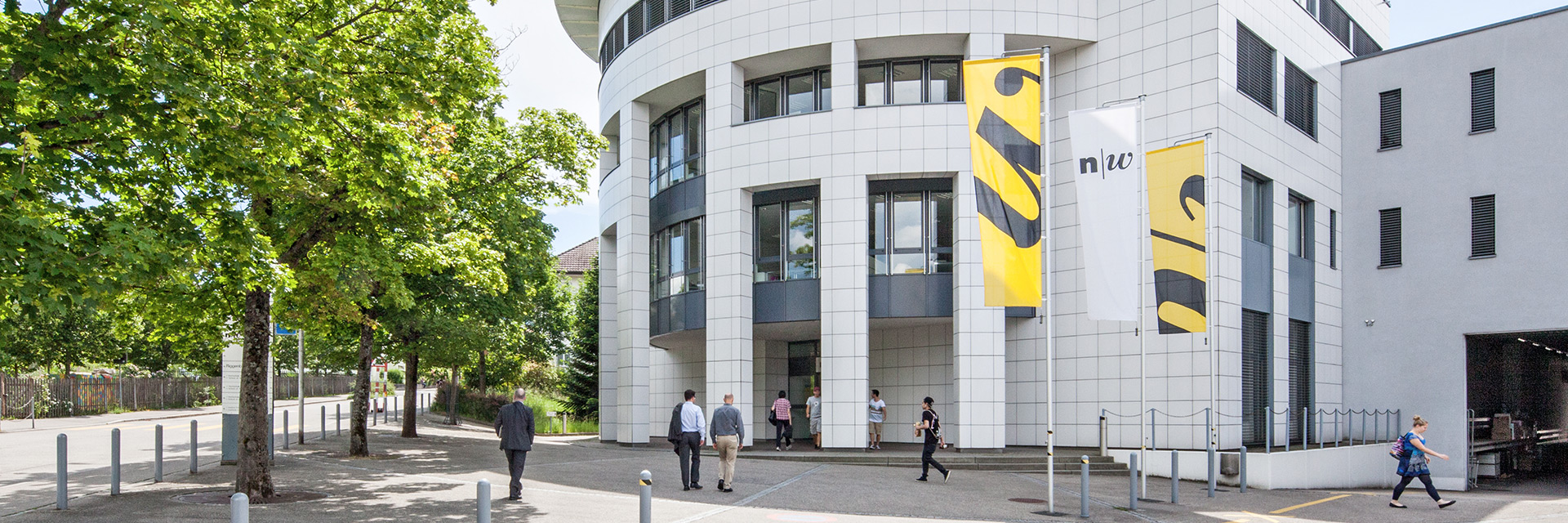
2023 – 2025 | FHNW University of Applied Sciences • Olten, Switzerland
My path, in a nutshell
I entered this Master's with a strong interest in digital transformation — but also with the feeling that real business problems are rarely tidy. Coming from a hands-on operations background, I had seen how decisions get made under pressure: fast, pragmatic, and often without a consistent system to evaluate what actually works. FHNW gave me the structure I was missing.
Over the program, I learned how to break complex situations into processes, data, and decisions. That shift changed the way I approach work: instead of jumping straight to tools, I learned to define the problem, map what's happening end-to-end, and make the “right next step” obvious — especially for non-technical stakeholders.
What I valued most was the practical mindset: not just “build something”, but define what success means, choose metrics that actually drive action, and explain trade-offs with clarity. The program helped me become the kind of person who can bridge strategy and execution — and communicate outcomes in a way that people can use.
If I had to sum it up: this Master's turned my curiosity about digital change into a structured approach to improving how organizations work.
What I focused on
Process thinking
I learned how to model workflows in a way that reveals what’s really happening — where handovers break, where bottlenecks hide, and where effort doesn’t translate into value. This helped me move from “fixing symptoms” to improving systems.
What it gave me: a clear way to create structure before choosing tools or solutions.
Analytics for decision-making
I learned that dashboards only matter when they reduce uncertainty and support action. The focus wasn’t just on visualization — it was about defining KPIs that represent real behavior, interpreting results with business context, and communicating insights without losing nuance.
What it gave me: KPI thinking + insight storytelling, not just charts.
Business–IT alignment
I trained myself to translate stakeholder goals into structured requirements and realistic solutions. That includes balancing speed and risk, understanding constraints, and making trade-offs visible so teams can align — especially when business and tech priorities pull in different directions.
What it gave me: a practical “translator mindset” between stakeholders, data, and delivery.
Courses that shaped me
Rather than listing modules like a transcript, I think about them as “chapters” that built my approach step by step — from structure, to analytics, to execution, and finally governance and decision quality.
Chapter 1 — Building structure
- Business Process Management
- Alignment of Business and IT
What it gave me: a repeatable way to understand a problem end-to-end before proposing improvements.
Chapter 2 — Turning data into decisions
- Business Intelligence
- Data Analytics (applied)
What it gave me: stronger analytical reasoning — turning numbers into decisions, not just reporting.
Chapter 3 — Strategy & innovation mindset
- Strategic Business Innovation
- Emerging Topics for Business Information Systems
- Lean Entrepreneurship
What it gave me: a way to evaluate ideas through value, feasibility, and execution — not hype.
Chapter 4 — Execution in modern organizations
- Agile Business Analysis
- Digitalization of Business Processes
What it gave me: stakeholder-first delivery — building with people, not just for them.
Chapter 5 — Governance & decision quality
- IT Governance, Risk and Compliance
- Qualitative Decision Making & Knowledge Management
What it gave me: a mature view of how adoption, risk, and knowledge flow decide whether “good solutions” actually work in the real world.
Thesis (capstone)
The Impact of Digital Technology on Customer Loyalty and Experience
My thesis brought everything together: process thinking, KPI design, analysis, and storytelling. I explored how digital services influence customer experience in a real business environment — focusing on measurable adoption signals and customer satisfaction outcomes.
The biggest lesson wasn't just technical. It was learning how to communicate insights responsibly: acknowledging limitations, keeping the message decision-relevant, and making recommendations that are practical to implement.
Focus
Adoption signals • Customer experience • Decision relevance
Approach
Structured KPI thinking + qualitative interpretation
Outcome
A practical narrative leaders can use, not just academic output
Overall, FHNW shaped the kind of professional I want to be: someone who can sit between business and technology, bring clarity to complexity, and build analytics that support decisions — not just reporting.